Top Motor Carrier Broker Insights and Trends for 2025 to Maximize Profits
In the ever-evolving logistics landscape, motor carrier brokers play a pivotal role in connecting shippers with transportation providers. As the industry anticipates significant changes in 2025, understanding emerging trends and insights becomes crucial for maximizing profitability. According to the American Trucking Associations, the freight industry is projected to grow substantially, with the total revenue expected to reach $1 trillion by 2023, underlining the importance of motor carrier brokers in optimizing supply chain efficiencies.
As we look towards the future, several key trends emerge that can influence the operational strategies of motor carrier brokers. The increased adoption of technology and data analytics is revolutionizing how brokers interact with shippers and carriers, leading to enhanced decision-making and improved service offerings. Additionally, sustainability practices are gaining traction, with a report from FreightWaves indicating that nearly 70% of shippers are prioritizing environmentally friendly transportation options. Understanding these dynamics and leveraging the right tools will be essential for motor carrier brokers aiming to thrive in the competitive landscape of 2025.

Key Factors Driving Profitability in Motor Carrier Brokerage for 2025
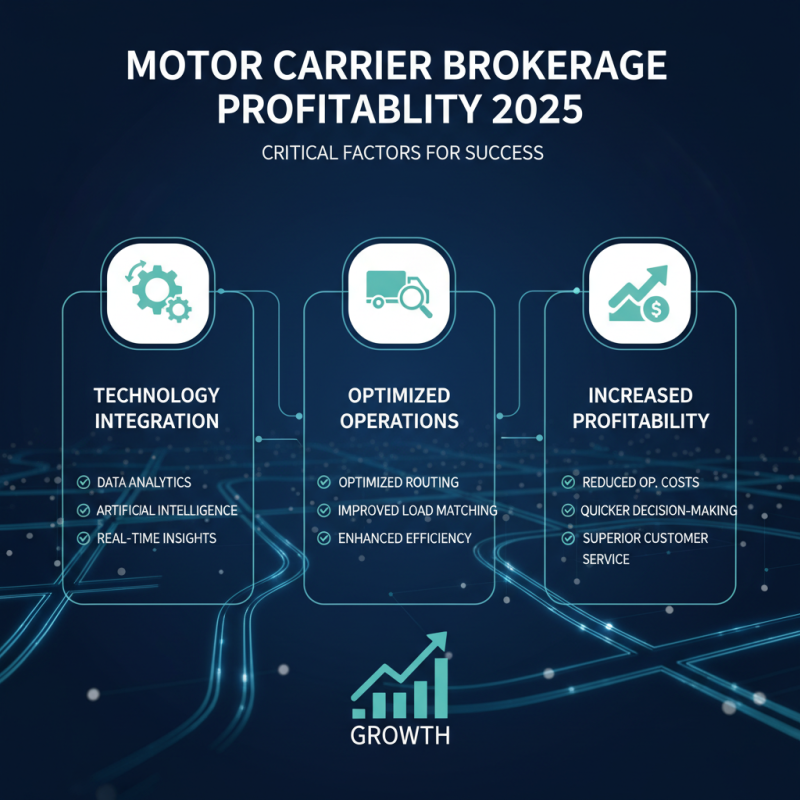
The profitability of motor carrier brokerage in 2025 will hinge on several critical factors that are reshaping the transportation landscape. One of the most significant drivers will be the integration of advanced technology into brokerage operations. Utilizing data analytics and artificial intelligence can help brokers optimize routing, improve load matching, and enhance overall efficiency. This technological adaptation not only reduces operational costs but also provides brokers with real-time insights, allowing for quicker decision-making and enhanced customer service.
Another crucial aspect influencing profitability is the evolving regulatory environment. As governments continue to implement stricter regulations regarding emissions and safety standards, brokers must stay informed and compliant. Adapting to these regulations not only prevents costly fines but can also create opportunities for brokers to differentiate themselves through sustainable practices. Additionally, investment in training and development for stakeholders in the brokerage process will ensure that the workforce remains knowledgeable and adaptive, ultimately driving better service quality and customer satisfaction.
Lastly, understanding market dynamics and customer preferences will be essential in 2025. Brokers must focus on building strong relationships with both shippers and carriers, fostering trust and loyalty. Adopting a customer-centric approach that includes personalized solutions and transparent communication can lead to long-term partnerships, driving repeat business. By aligning their strategies with the evolving needs of the market, brokers can position themselves to maximize their profitability in the competitive landscape of motor carrier brokerage.
Emerging Technologies Impacting the Motor Carrier Brokerage Industry
The motor carrier brokerage industry is on the cusp of significant transformation as emerging technologies reshape its landscape. As indicated by a recent analysis from the American Transportation Research Institute, nearly 70% of brokers believe that digital platforms will be pivotal in enhancing operational efficiency by 2025. These platforms, powered by Artificial Intelligence (AI) and Machine Learning (ML), are expected to streamline route optimization, enabling brokers to improve service delivery while reducing operational costs.
In addition to digital platforms, the rise of blockchain technology is poised to revolutionize transparency and security within the industry. A study from Gartner projects that by 2024, 50% of freight and logistics companies will have adopted blockchain for their operations, resulting in greater trust between brokers and carriers. This shift not only enhances transaction speed but also minimizes fraud risks, which can significantly impact profitability.
With the integration of these technologies, motor carriers can anticipate a more agile and responsive brokerage environment, making it essential for industry players to adapt and leverage these innovations for maximizing their profits by 2025.
Shifting Regulatory Landscapes and Their Effects on Profit Margins
As the regulatory landscape continues to evolve, motor carrier brokers must adapt to new policies that can significantly impact profit margins.
One key trend shaping this scenario is the increasing focus on
sustainability and environmental regulations.
Compliance with stricter emission standards and the adoption of green logistics practices not only necessitate operational adjustments
but also open up opportunities for brokers to enhance their value propositions. Brokers that navigate these regulations effectively position themselves
as forward-thinking partners, attracting clients who prioritize sustainability.
Additionally, technological advancements are driving regulatory changes that impact profit margins. The rise of digital platforms and freight matching technologies is
reshaping the way brokers operate, necessitating compliance with new data privacy regulations and cybersecurity standards.
As brokers invest in technology to stay competitive, they must also be mindful of the regulatory implications of their digital strategies.
By aligning technological investments with compliance requirements, brokers can streamline operations and minimize risks, ultimately
leading to improved profitability in an increasingly complex regulatory environment.
Evolving Customer Expectations and Their Influence on Broker Strategies
As we look ahead to 2025, understanding evolving customer expectations is paramount for motor carrier brokers aiming to maximize profits. According to a recent study by the American Transportation Research Institute, 76% of shippers now expect real-time visibility into their shipments, a marked increase from previous years. This trend underscores the need for brokers to adopt advanced technology solutions that provide comprehensive tracking capabilities. Implementing platforms that facilitate communication and transparency not only meets customer demands but can also enhance relationships and loyalty, ultimately driving profitability.
Moreover, the shift towards sustainability in logistics is reshaping broker strategies. A report from the logistics consultancy firm, Armstrong & Associates, highlights that 67% of consumers are inclined to choose providers with environmentally friendly practices. Brokers must align their offerings with these values, integrating eco-friendly solutions into their service portfolio to attract a broader clientele. As customer preferences fluctuate, adaptability will be crucial; brokers who anticipate and respond to these changes, by fostering innovative approaches and sustainable practices, will position themselves favorably in the evolving market landscape.
Future Market Trends and Opportunities for Motor Carrier Brokers in 2025
As we look towards 2025, motor carrier brokers are poised to navigate an evolving landscape filled with unique market trends and opportunities. One significant trend is the increased adoption of technology, particularly artificial intelligence and data analytics. These tools enhance operational efficiency by facilitating better decision-making, improving route optimization, and streamlining communication between brokers and carriers. By harnessing advanced algorithms and real-time data, brokers can respond more swiftly to market demands, thus maximizing profitability and customer satisfaction.
Another crucial opportunity lies in the growing emphasis on sustainability within the transportation industry. As environmental concerns take center stage, motor carrier brokers who prioritize eco-friendly practices and help shippers reduce their carbon footprint will likely gain a competitive edge. This includes collaborating with carriers that utilize greener technologies and implementing strategies that promote fuel efficiency. By aligning their services with sustainability goals, brokers not only cater to a changing market but also attract environmentally conscious clients, presenting an avenue for increased revenues and stronger market positioning.
Top Motor Carrier Broker Insights and Trends for 2025 to Maximize Profits
| Insight/Trend |
Description |
Projected Impact (%) |
Revenue Growth Opportunity ($ billion) |
| Digital Transformation |
Adoption of AI and machine learning for operational efficiency. |
30% |
$5 billion |
| Sustainability Practices |
Incorporating green logistics and eco-friendly options. |
25% |
$4 billion |
| Regulatory Changes |
New regulations affecting operational costs and compliance. |
20% |
$3 billion |
| E-commerce Growth |
Increased demand for logistics services due to e-commerce expansion. |
35% |
$6 billion |
| Technology Integration |
Use of IoT and blockchain for improved tracking and transparency. |
28% |
$4.5 billion |